Description
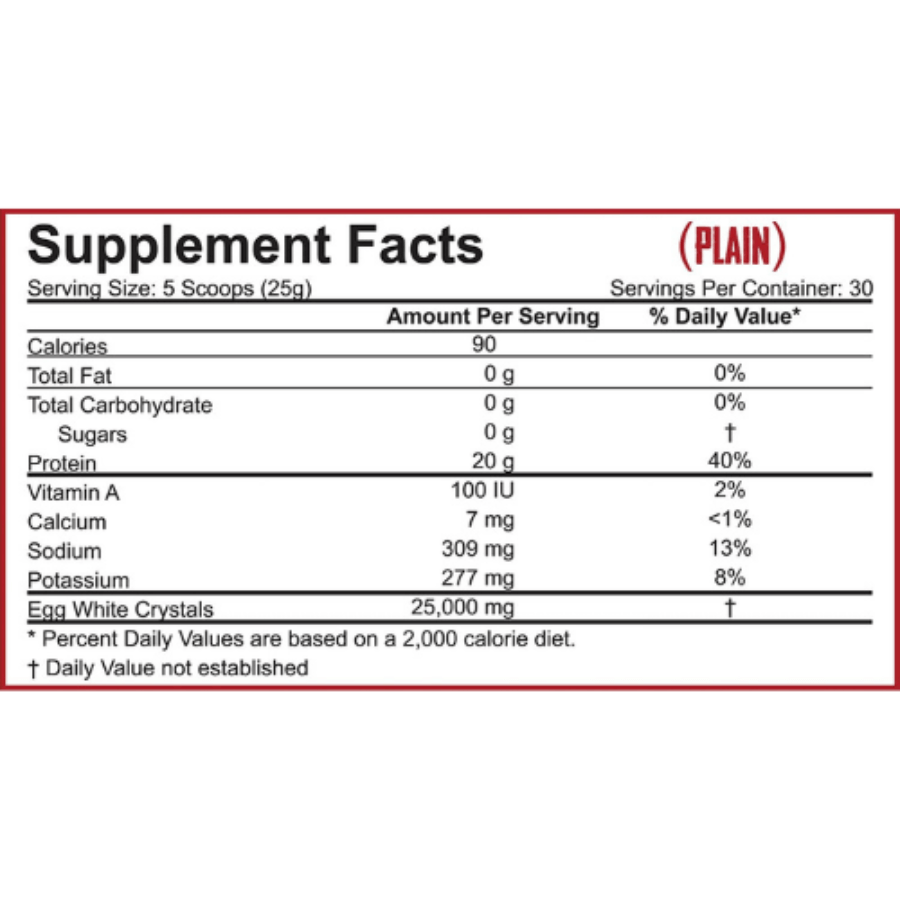
Go ahead, and pick up a typical container of protein powder. Now take a good look at the label. If it’s like many of the protein powders on the market, you’re getting at least 100 calories per serving and, very likely, too much sugar. So why should you settle for sugar in your protein powder Sure, maybe a gram or two, but more than that No way. Also, did you check the fat grams and total carbs content Finally, you may be curious about how many popular powders contain artificial ingredients. Some may even be guilty of amino spiking. These are some reasons Rich was against using a typical protein powder.
So where SHOULD you get your protein when it comes to supplementation
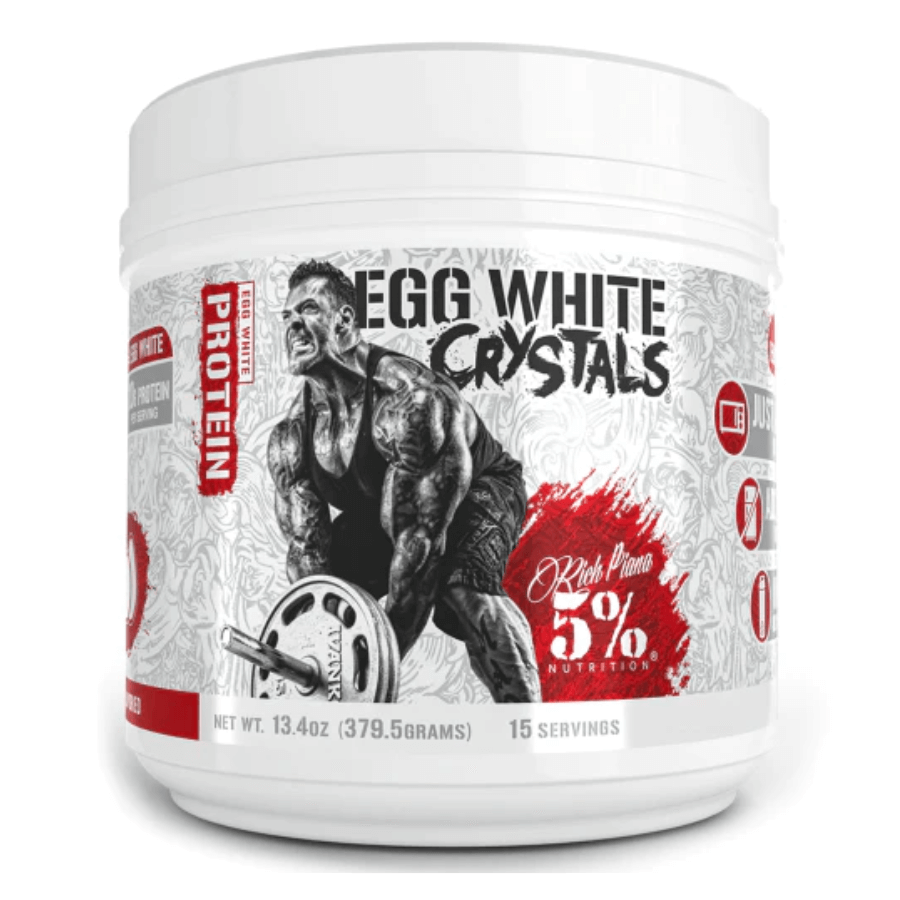
Start by getting some 5% Nutrition Egg White Crystals, a product sourced from REAL FOODS, just as Rich Piana mentioned. So what is an egg white crystal Egg White Crystals come from gently and slowly dehydrating eggs until only the crystalline whites remain. That’s it. There’s absolutely nothing else in this product.
You can use 5% Egg White Crystals the same way you would a regular egg and more! Because they’re unflavored, you can add them to any meal to boost high-quality protein. If you want to cook with them, add water! On the go No problem. Just bring a funnel with a few scoops of egg white crystals along with your protein shake or smoothie. Since they’re unflavored, they can be mixed into almost anything.
Plus, there’s no refrigeration required. That means you can take a serving or two with you. That makes 5% Egg White Crystals perfect for your busy, on-the-go lifestyle.
How do 5% Egg White Crystals compare with whey or protein powder
For starters, egg whites and crystals have a higher biological value protein than most other proteins, comparable to whey. That’s to say, the amount of protein available for humans to absorb from egg whites and egg white crystals is represented by a Biological Value (or “BV”) of 100, while proteins sourced from whey are around approximately 104. In addition, egg white crystals also have a net protein utilization (NPU) rating of 100 and an overall protein efficiency ratio (or “PER”) of 3.9, that’s higher than many other protein sources, including whey.
Reviews
There are no reviews yet.