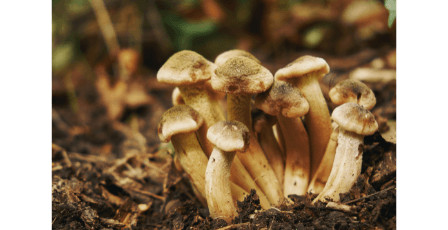
- More than a food ingredient: Certain mushroom species contain bioactive compounds being studied for their potential effects on cognitive function, immunity, and general well-being.
- Lion’s Mane and cognition: Hericium erinaceus has attracted attention for its potential neuroprotective properties and possible benefits for memory and cognitive performance.
- Chaga and immune function: Chaga contains compounds investigated for antioxidant and immune-modulating activity, although evidence of clinical benefits remains limited.
- Maitake and beta-glucans: Maitake is particularly interesting for its beta-glucan content and potential effects on immune responses and cardiovascular health.
- Reishi and stress: Reishi has a long history of traditional use and is being investigated for its potential influence on immunity, fatigue, and well-being.
- Research limitations: Laboratory findings and traditional uses do not necessarily translate into proven health benefits in humans. More high-quality clinical studies are needed.
In our culture, mushrooms are treated solely as a delicious side dish. Dietitians, among others, are responsible for this state of affairs, often downplaying the importance of mushrooms in our menu. Some even went so far as to claim that they are a completely worthless component of a diet. Fortunately, the bad fame is slowly passing. More and more experts draw attention to the fact that mushrooms can be a valuable element of our diet. However, much more interesting are the reports about the nootropic properties of some mushrooms. Species such as Lion’s Mane, Chaga, Maitake, and Reishi are worth special attention. So what do you need to know about them?
Lion’s Mane – a true nootropic
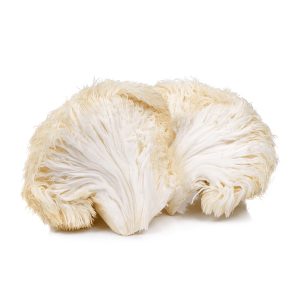
The term “lion’s mane” doesn’t seem to fit the mushroom at all. However, it is enough to see what Hericium Erinaceus looks like to understand such nomenclature. This mushroom is distinguished by its very characteristic fruiting body with protruding spines. It resembles a piece of a lion’s Mane from a distance, which is what gave it its name.
Linguistic curiosities, however, will fade into the background when we take a closer look at the properties of this mushroom. Why? Because Lion’s Mane deserves to be called a full-fledged nootropic. In this respect, it is an entirely unique species. Admittedly, some other mushrooms also have very positive effects on the human body. However, only Lion’s Mane can contribute to improving our cognitive abilities.

Its supplementation leads to an increase in the concentration of choline in our brain. This is a crucial neurotransmitter responsible for almost all mental abilities. Perhaps this is why people who take Lion’s Mane in supplement form have seen significant improvements in cognitive function. In addition, the extract derived from Hericium Erinaceus has a neuroprotective effect and supports the work of neurons. Thus, it can be recommended to everyone who wants to unleash their full mental potential!
Chaga – a unique example of a “cancer” that can help people

The appearance of the Chaga fungus (Inonotus obliquus) on the bark of a tree is a hazardous phenomenon for the latter. It is worth knowing that this species is commonly referred to as “black huba.” Indeed, it parasitizes trees, which would make it difficult to suspect it of any beneficial properties. After all, this fungus is sometimes called “tumor” or “birch cancer.” However, nature can really surprise us…
Research has shown that Chaga mushroom extract can benefit the human body. The first and most well-documented reports suggest a correlation between the intake of Chaga mushrooms and an overall strengthening of the body. However, in later studies, scientists discovered that this effect is mainly due to the stimulating effect of the mushroom on our immune system.
Even more surprising are the reports of the potential anti-cancer properties of Chaga mushrooms. Thus, it is an entirely unique case where a fungus that is a “cancer” of a tree can prevent cancer development in humans. However, it is essential to remember that such reports are minimal at this point. Therefore, at this point, it is worth treating them only as a curiosity.
Maitake – an eastern way to strengthen immunity

While the anti-cancer properties of Chaga mushrooms have not been unequivocally confirmed, Maitake mushrooms may actually help cancer patients. Such conclusions were reached by American and Japanese scientists studying this species. So why does this mushroom have such properties? Well, Maitake mushrooms (Grifola frondosa) contain large amounts of beta-glucan. This is a compound that stimulates our immune system and, as a result, intensifies its activity. Meanwhile, a growing number of studies indicate that cancer develops much faster and easier in organisms with a weak immune system.

Additionally, it is worth noting that Maitake mushrooms have a beneficial effect on the functioning of the circulatory system. In this case, a particularly noticeable effect of supplementation is a reduction in blood pressure. This explains why Maitake mushrooms are recommended for people suffering from hypertension.
We should not forget about the most critical issue, namely the adaptogenic properties of Maitake mushrooms. In traditional Far Eastern medicine, extracts from these mushrooms are used to remedy stress and anxiety.
Reishi – the perfect synergy with Maitake mushrooms
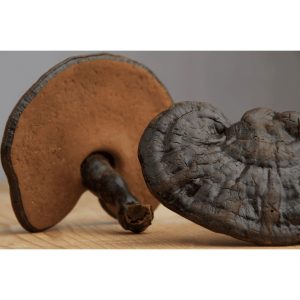
The similarities between Reishi and Maitake mushrooms are all too apparent. Of course, these only apply to their actions because they are entirely different species in nature. However, when it comes to their effect on the human body, it is very similar. So here, too, we should mention the positive impact on the immune system and the cardiovascular system. Moreover, Reishi mushrooms also harbor potential anti-cancer properties.
What makes it possible for Reishi mushrooms to support brain function? The reason is straightforward. Similar to Maitake, consuming Reishi mushroom extract provides adaptogenic benefits. Thus, such supplementation relieves perceived stress and tension. Moreover, there are several reports in the scientific literature about the neuroprotective effects of Reishi. As far as folk medicine is concerned, Reishi mushrooms are used as a cure for insomnia. This provides the best evidence for their calming properties.
Summary
The information cited above shows that mushrooms are highly underrated. In fact, they can provide us with numerous health benefits with particular emphasis on brain function. In this regard, Lion’s Mane is the most impressive, as it can confidently act as a nootropic. As for Chaga, Maitake, and Reishi mushrooms, each of them strengthens our body. So it’s worth overcoming any preconceptions you may have and testing these great mushrooms for yourself!